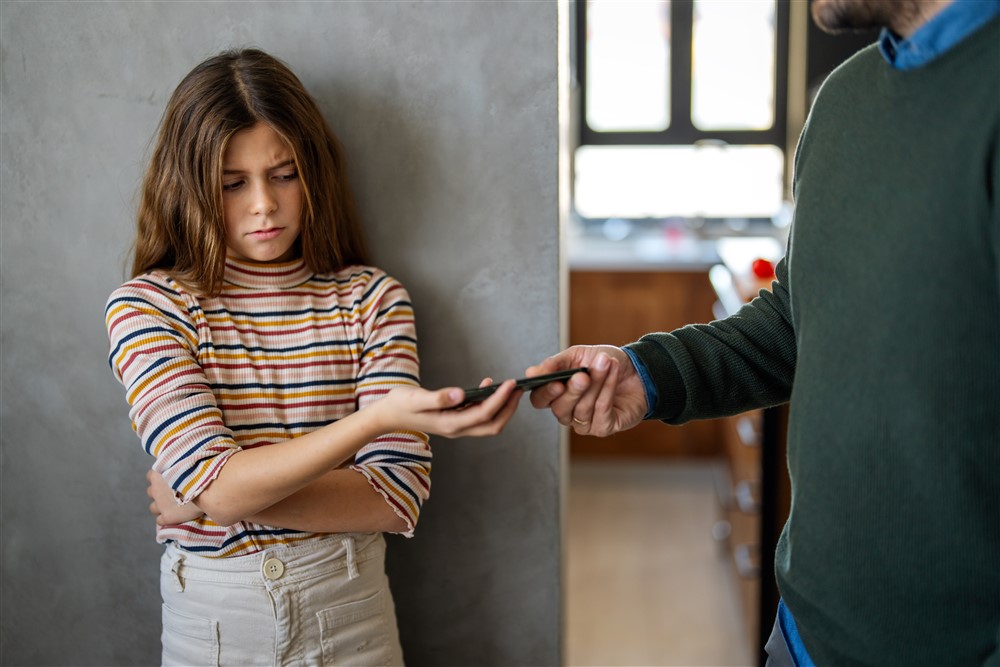

Have you read the book by Jonathan Haidt, The Anxious Generation? It’s about how childhood has been rewired in recent years because of two major shifts – the loss of free play and the use of smartphones by children.
The decline of the play-based childhood
Starting in the 1980s, children have spent less time in unstructured, unsupervised play, had fewer peer-to-peer risk-taking opportunities, and have become more sheltered (by parents, schools, and society) in real-world interactions
Educators know that free play helps children develop resilience, social skills, autonomy and the capacity to deal with failure—what Haidt terms an “antifragile” childhood.
The rise of the phone-based childhood
The sharp rise in adolescent anxiety, depression, self-harm and suicide (beginning around 2010) coincides with the widespread adoption of smartphones and social media, especially among children under 18. They have significantly harmed our children.
Four major harms of a “phone-based childhood”
-
- social deprivation (fewer real friendships, more isolation)
- sleep deprivation (screens, late nights)
- attention fragmentation (constant switching, shallow engagement)
- addiction-style patterns or compulsive usage of social media.
This combination has created an environment where children and adolescents are more vulnerable to mental illness because they lost key developmental experiences while gaining heavy exposures to comparative, curated, social media based life experiences.
Haidt found that in many developed countries, from roughly 2010–2012 onward, rates of anxiety, depression diagnoses, self-harm hospital visits, and suicide among adolescents rose sharply—and more sharply for females in many cases.
Can Our Children Recover?
Parents, schools, tech companies, and policy‐makers can take action to influence societal changes.
-
- Delay smartphone ownership for children
- Ban phones during school time
- Increase real-world play opportunities and unsupervised peer interaction
- Strengthen parental and community norms so that no single family is disadvantaged by delaying phone access
Upstream Prevention Starts With Connectedness
Knowing about the sharp rise in self‐harm and suicide in adolescents helps us to address social isolation, disrupted peer relationships, sleep deprivation and constant comparative pressures—factors known to raise suicide risk – before it’s too late.
Connectedness is a powerful protective factor that encourages restoring social connections, building support networks and increasing in-person peer interaction. Educating our children and those who care for them about the negative effects of social media usage, screen time, peer-isolation and the positive role of free unsupervised play where children learn to solve problems and develop resilience are solutions that we can all implement right now.
 A
Culture of Caring: A Suicide Prevention Guide for Schools (K-12) was
created as a resource for educators who want to know how to get started and
what steps to take to create a suicide prevention plan that will work for their
schools and districts. It is written from my perspective as a school principal
and survivor of suicide loss, not an expert in psychology or counseling. I hope
that any teacher, school counselor, psychologist, principal, or district
administrator can pick up this book, flip to a chapter, and easily find helpful
answers to the questions they are likely to have about what schools can do to
prevent suicide.
A
Culture of Caring: A Suicide Prevention Guide for Schools (K-12) was
created as a resource for educators who want to know how to get started and
what steps to take to create a suicide prevention plan that will work for their
schools and districts. It is written from my perspective as a school principal
and survivor of suicide loss, not an expert in psychology or counseling. I hope
that any teacher, school counselor, psychologist, principal, or district
administrator can pick up this book, flip to a chapter, and easily find helpful
answers to the questions they are likely to have about what schools can do to
prevent suicide.