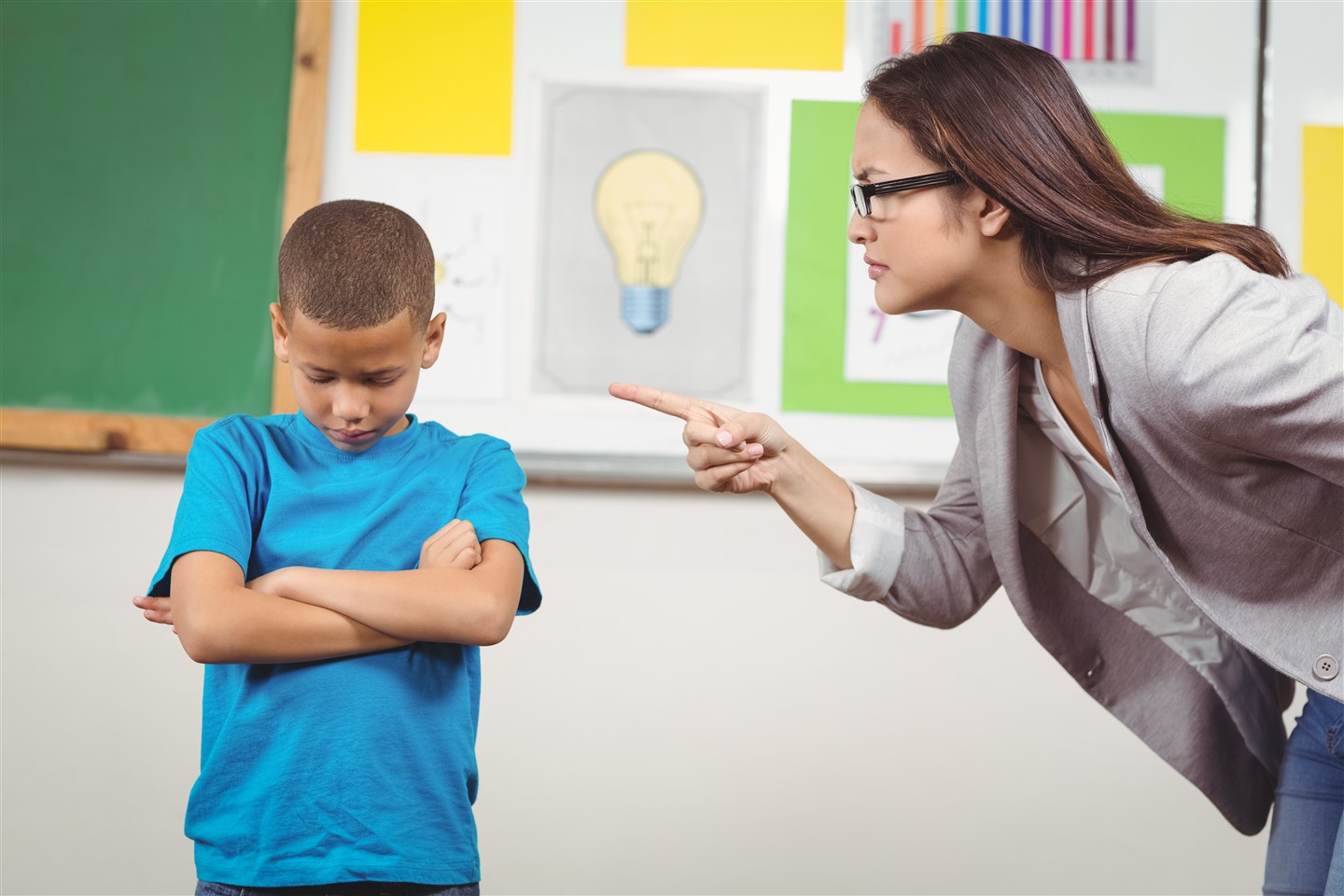
Children can be aggressive researchers as they experiment and learn how others will react to their behavior. When children misbehave, it is up to the adults in their lives to help them correct their behavior at home and at school. Discipline styles are likely to have a profound effect on children. I’ve heard stories about teachers who called their students stupid, convincing impressionable children that, since adults know best, it must be true. And then there are parents who repeatedly tell their children that they’re worthless and will never amount to anything. A whack with a belt from a parent or a humiliating punishment by a teacher adds another layer of shame to a vulnerable child’s psyche.
That kind of discipline is punitive and rarely helps a child to change their behavior. It creates a feeling of resentment, anger, and low self-esteem. A child who grows up in a punitive setting is likely to repeat those patterns with their own children, perpetuating a cycle of negative reinforcement for generations. Too often, problem-solving and coping skills leading to resilience become unattainable for those children.
So how can parents and teachers learn to substitute a strategy of logical consequences and positive reinforcement for punitive discipline?
The Best Ways to Discipline Children: Why Positive Reinforcement Works — and How Schools Can Support Parents
 Discipline is one of the most challenging and emotionally charged aspects of raising children. Every parent wants to help their child grow into a responsible, respectful, and emotionally healthy young person, yet the path toward effective discipline can feel confusing and even overwhelming. Today, research in child development, psychology, and education offers clear guidance: children learn best through connection, consistency, and positive reinforcement rather than punitive discipline.
But families cannot—and should not—be expected to do this alone. Schools play a crucial role in reinforcing healthy discipline strategies and partnering with parents to create supportive, aligned environments for children.
Consider the differences between positive reinforcement and punitive discipline, how each affects children’s development, and what schools can do to help parents build effective, compassionate discipline practices at home.
Positive Reinforcement: Building Skills Through Encouragement
Positive reinforcement focuses on teaching and strengthening desired behaviors rather than punishing unwanted ones. This approach aligns with decades of research showing that children learn best when they feel safe, understood, and connected to the adults around them.
What Positive Reinforcement Looks Like
- Specific praise (“You worked really hard to clean your room today. Thank you.”)
- Reward systems (stickers, points, privileges)
- Clear expectations and routines
- Modeling calm behavior
- Natural and logical consequences (e.g., “If you spill it, you clean it up.”)
Why It Works
Positive reinforcement:
- Helps children internalize expectations rather than simply avoid punishment
- Strengthens the parent-child relationship
- Builds confidence and emotional regulation
- Encourages long-term motivation rather than fear-based compliance
- Reduces misbehavior because children feel seen and supported
Children who are raised with positive discipline strategies tend to show stronger executive functioning skills, higher academic achievement, and healthier social-emotional development.
Punitive Discipline: Why It Falls Short
Punitive discipline focuses on consequences imposed by adults—traditionally yelling, grounding, taking away privileges, or corporal punishment. While punitive actions may temporarily stop behavior, they do not teach skills or change behavior long-term.
What Punitive Discipline Looks Like
- Harsh verbal reprimands
- Grounding without explanation
- Taking things away in anger
- Physical punishment
What the Research Shows
Punitive discipline:
- Increases anxiety, fear, and shame
- Damages parent-child trust
- Often escalates behavior instead of reducing it
- Does not teach alternative or desired behaviors
- Can contribute to long-term emotional and behavioral challenges
For children experiencing trauma, poverty, or housing instability, punitive discipline can be especially harmful, as it compounds feelings of insecurity and unpredictability.
How Schools Can Support Parents in Making Healthy Discipline Decisions
Schools are uniquely positioned to help families because they interact with children daily and understand behavior patterns, strengths, and challenges. When parents and schools work together, children receive consistent messages and support across environments.
Provide Parent Education Workshops
Schools can offer workshops that teach positive discipline techniques parents can use at home. Teaching about child development and brain science helps parents understand why positive reinforcement is more effective.
Because misbehavior is often driven by emotion, self-regulation strategies are helpful tools parents can teach their children. Parents will benefit from learning about how childhood trauma affects a child’s behavior. Using simple strategies like setting consistent routines at home can help parents and children.
Share Clear Behavioral Expectations and Schoolwide Norms
Parents benefit from understanding how teachers manage behavior and from examples of language they use for redirection. Logical consequences work in the classroom just as they do in homes where positive reinforcement is consistently used.
If parents and teachers use similar approaches, children experience less confusion and are more successful in learning to control their own behavior.
Communicate Early and Often
Instead of contacting parents only when problems arise, teachers and administrators should routinely share positive updates and celebrate improvements. As a school principal, I always invited parents to share the problem-solving process with me and determine logical consequences together. It’s a great way to build trust and reduce the stigma parents feel when their child struggles.
Provide Consistent Behavioral Support Plans
When children have persistent challenges, teachers should work with parents and their child to develop collaborative behavior plans. Those plans may include daily check-in systems, visual schedules and charts, or executive functioning support skills that help children plan, prioritize, manage time, and stay organized to achieve goals.
Offer Mental Health and Family Support Resources
Many discipline challenges stem from stressors at home—such as housing instability, conflict, mental health issues, food insecurity, or parental burnout. Schools can connect families to counselors, social workers, community agencies, parenting groups, and, if available, on-campus family support centers.
Model Positive Reinforcement in the Classroom
Invite parents into the classroom to observe teachers using restorative conversations with students to address conflicts or behaviors by focusing on repairing harm and restoring relationships, rather than just assigning punishment. Calm-down spaces in a classroom can be recreated at home. Parents can learn positive behavior supports like setting clear expectations and routines, using positive reinforcement and praise, and teaching social skills. Teachers can show parents how they use a relationship-based management strategy to build and maintain positive connections.
Conclusion: Discipline Is About Teaching, Not Punishing

Effective discipline is rooted in respect, guidance, and skill-building—not control or fear. Children respond best to models of calm, consistent, positive reinforcement that help them understand expectations and learn from mistakes. Punitive discipline may stop behavior in the moment, but rarely fosters long-lasting change or emotional health.
When schools partner with parents—offering education, modeling positive approaches, and providing support—children benefit from aligned messages and a united community of caring adults.
In the end, discipline is not about obedience. It is about helping children make choices that will help them grow into competent, confident, compassionate adults.
 A
Culture of Caring: A Suicide Prevention Guide for Schools (K-12) was
created as a resource for educators who want to know how to get started and
what steps to take to create a suicide prevention plan that will work for their
schools and districts. It is written from my perspective as a school principal
and survivor of suicide loss, not an expert in psychology or counseling. I hope
that any teacher, school counselor, psychologist, principal, or district
administrator can pick up this book, flip to a chapter, and easily find helpful
answers to the questions they are likely to have about what schools can do to
prevent suicide.
A
Culture of Caring: A Suicide Prevention Guide for Schools (K-12) was
created as a resource for educators who want to know how to get started and
what steps to take to create a suicide prevention plan that will work for their
schools and districts. It is written from my perspective as a school principal
and survivor of suicide loss, not an expert in psychology or counseling. I hope
that any teacher, school counselor, psychologist, principal, or district
administrator can pick up this book, flip to a chapter, and easily find helpful
answers to the questions they are likely to have about what schools can do to
prevent suicide.